The Way Forward
The core focus of the Ssuper EIP project is to adopt and implement advanced slurry management technologies and practices aimed at reducing the environmental harms associated with slurry, including nutrient runoff, greenhouse gas emissions and storage challenges. In doing so, the project offers farmers economic benefits, primarily through reduced fertiliser costs and enhanced soil health.
The project’s goals are designed to help farmers move beyond traditional, often inefficient methods of slurry handling, encouraging the adoption of more sustainable practices. This will be achieved through advanced slurry separation techniques, allowing slurry to be converted into separate, more manageable streams, and the use of biological inoculants to remediate the slurry and enhance soil microbiology. These methods will boost the benefits of both the liquid and dry fractions of slurry as an organic fertiliser while mitigating its adverse environmental impact. By reducing the reliance on chemical fertilisers, which are costly and detrimental to long-term soil health, this project provides farmers with practical, cost-effective and environmentally friendly alternatives.
How we plan to fix the problem:
The Six Pillars of Action
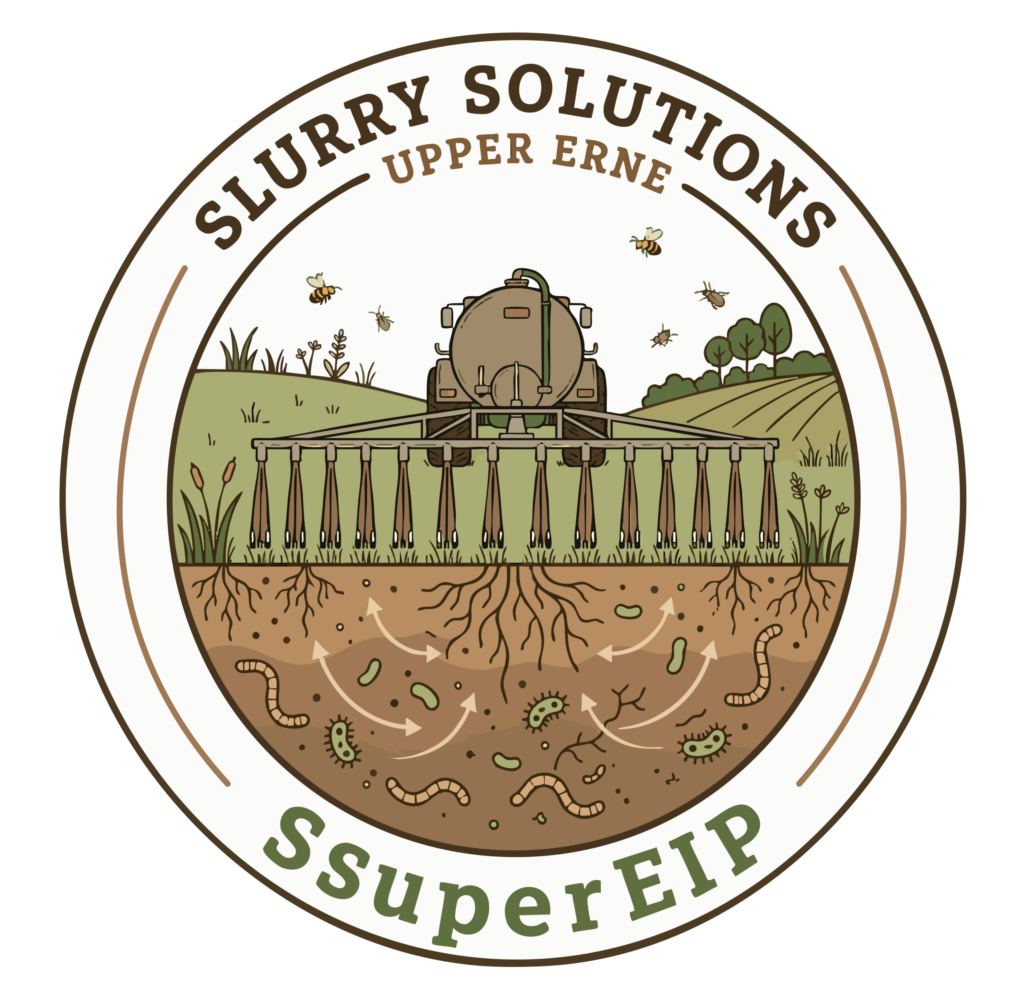
To achieve its goals, the project will operate around six key pillars:
- Separate: Implement advanced slurry separation technologies to divide slurry into distinct components, improving storage and application efficiency.
- Inoculate: Use biological inoculants to promote healthy soil microbiology, enhancing nutrient cycling, reducing the need for chemical inputs whilst reducing greenhouse gas emissions.
- Evaluate: Continuously assess the effectiveness of slurry separation, biological inoculants and soil functionality, whilst refining techniques to improve farm sustainability and environmental performance.
- Regenerate: Focus on regenerative farming practices that enhance soil health, biodiversity and restoring ecosystem services through improved slurry management.
- Educate: Equip farmers with the knowledge and skills necessary to implement these regenerative practices on their farms.
- Disseminate: Share knowledge and best practices with the broader farming community, encouraging collaboration and peer-to-peer learning.
By focusing on these six pillars, the project aims to create a regenerative, circular farming system adaptable to both intensive and small scale farms where slurry is viewed as a valuable resource that benefits both the environment and farming communities.
Funded By