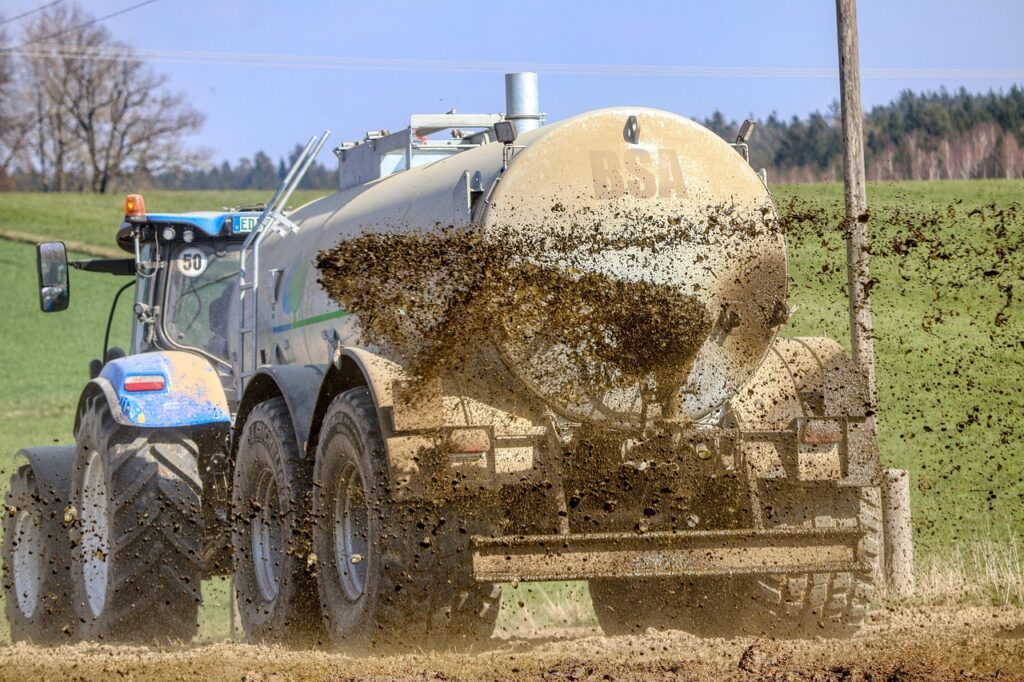
Slurry, a mixture of animal waste and water, is a by-product of Ireland’s expanding dairy and beef sectors. As herd sizes grow to meet the rising demand for dairy and meat products, the volume of slurry produced also increases. Managing this growing waste volume is becoming a significant challenge for both farmers and environmental regulators.
Soil Health and Sustainability
Modern agriculture has prioritised soil chemistry over soil biology, degrading soils and impairing their functions. This has led to compaction, loss of microbes and biodiversity, depletion of organic matter, destruction of humus and weak root structures, increasing reliance on chemicals. Mono-crop pasture, hedgerow removal and excessive slurry spreading have intensified the problem, causing greenhouse gas emissions, watercourse run-off, declining water quality, loss of wildlife and fish kills, all linked to climate change.
True sustainability requires shifting from chemical-based farming to biologically driven soil health solutions. Soil microbes unlock nutrients, fix nitrogen, sequester carbon and provide plants with bioavailable nutrients. As John Kempf states: “Abundant soil microbiology can overcome challenges of imbalanced chemistry, but perfect chemistry cannot overcome dysfunctional biology.”
Hans Jenny, father of soil science, described soil as a dynamic system shaped by climate, organisms, relief, parent material and time (CLORPT). His work highlighted that fertility and health depend not just on chemistry but on the life within soil.
Enhancing soil health reduces chemical dependency, increases water holding capacity, drives nutrient cycling, complexes heavy metals, promotes strong root growth leading to more nutrient dense grass swards, increases production, drives disease resistance and restores biodiversity which strengthens farming resilience—critical for long-term agricultural, environmental and economic sustainability.
Water Quality
Ireland faces a serious water quality crisis, with slurry runoff a major contributor, loading nutrients into lakes and rivers, accelerating eutrophication, causing algal blooms, oxygen depletion and aquatic life loss. Despite ongoing initiatives, restoration is impossible without tackling slurry management. Teagasc highlights the importance of buffer zones, restricting slurry spreading near water bodies, karst features and drinking water sources. Great strides are being made with the Farming for Water EIP and the ASSAP Programme looking at rainwater management plans, nutrient management plans and offering a suite of measures for water protection. We believe this project dovetails well with these initiatives and fills a critical gap by offering solutions for the challenges created specifically by slurry.
Emissions & Climate Change
In addition to its impact on water quality and soil health, slurry agitation and spreading contribute to harmful gas emissions and air pollutants. These gases have far-reaching environmental consequences and, as recent weather patterns show, prolonged wet winters exacerbate slurry storage and management issues.
Agricultural emissions fall into two categories: greenhouse gases (GHGs) and air pollutants.
● Greenhouse gases like methane (CH₄) and nitrous oxide (N₂O) have a negative impact on climate change. Agriculture contributes over 30% of Ireland’s national GHG emissions, with methane making up around two-thirds of this total.
● Ammonia (NH₃), an air pollutant, is responsible for 99% of Ireland’s ammonia emissions, harming both human and animal health and damaging ecosystems.
Organic fertilisers, bio-based products developed from slurry, can be a valuable resource and offer a bio circular economy solution for the farm when managed correctly. Traditional slurry spreading can lead to nutrient losses to air and water. By minimizing these losses, farmers can improve farm profitability and enhance waste reduction while safeguarding air, water and soil quality.
The Way Forward……….
This project represents a significant step toward a more sustainable, circular farming system. By addressing the slurry issue through separation and remediation, we aim to restore soil health and alleviate storage issues whilst reducing emissions, improving water quality and empowering farmers with practical solutions.